

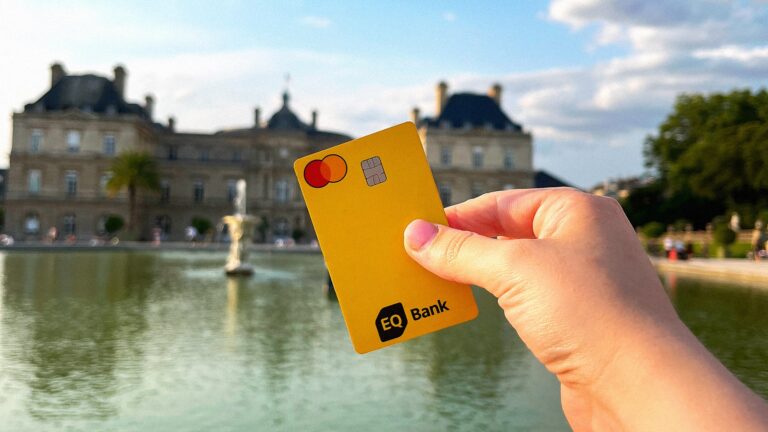
Canada’s banking landscape is in the midst of a quiet transformation — one powered not by credit, but by prepaid. This fall, EQ Bank announced that Canadians have loaded more than $1 billion onto its prepaid Mastercard since launch, marking a major milestone for both the digital-only bank and a payments category once considered niche.
 In an interview with Fintech.ca, Dan Broten, Head of EQ Bank, explains how the reloadable card has become a go-to everyday spending tool for Canadians seeking better rewards, lower fees, and more control over their finances.
From cashback and interest on balances to instant loading and fee reimbursements, EQ Bank’s approach illustrates how prepaid technology is evolving into the backbone of modern digital banking.
Broten discusses the drivers behind prepaid’s rapid growth, how EQ Bank brought its card to market in just one year, and why he believes “Prepaid 3.0” — programmable, embedded, and purpose-driven — will shape the next era of consumer finance.
Can you give us an overview of EQ Bank’s prepaid card?
DB: The EQ Bank Card is one of our most innovative products. It’s a prepaid, reloadable Mastercard that feels a lot like a debit card from the customer’s perspective – you simply load funds from your EQ Bank account and then tap, shop online or withdraw cash from ATMs. It’s also accepted anywhere credit cards are, but under the hood it runs on prepaid rails, which gives us far more flexibility than traditional debit or credit cards.
For one, compared to debit, it comes with better support for online purchases, wider international acceptance and great exchange rates. Because prepaid runs on higher interchange than debit, we were also able to build in better returns like interest on the balance and cashback – something you don’t typically see with debit cards in Canada. And just as importantly, we designed it to be accessible. That choice was easy for us.
When we launched, our goal was to offer more value than Canadians were used to getting from their everyday bank cards. That means no added foreign exchange fees – we offer customers the Mastercard exchange rate directly. We also don’t charge any monthly or annual fees, and there are no ATM fees on our end – in fact, we reimburse customers for ATM withdrawal fees charged by other banks. To top all that, the rewards are great – customers earn high interest on the Card balance, as well as a cashback. It’s really packed with features.
We’ve seen strong adoption since our launch and recently crossed an important milestone of $1 billion in funds loaded to the Card across our customer base. That shows there’s real appetite for a smarter everyday spending product in Canada and that this kind of payment technology has become a go-to choice for customers, rather than a relative unknown, since we paved the way just two short years ago.
What does the recent milestone of surpassing $1 billion in card loads say about how Canadians are adopting prepaid cards?
DB: We’ve seen strong adoption of our own card, and industry data points in the same direction – prepaid is on the rise. In Canada, prepaid cards recorded the fastest growth in transaction value among all payment methods, up 10% between 2022 and 2023. Total loads grew 27% to $11.4 billion between 2021 and 2023, and are projected to reach $17.4 billion by 2028.
There are many potential reasons for this. A 2023 Payments Canada and Leger study found that frequent prepaid users value fast transactions, loyalty rewards, the ability to spend their own funds rather than borrow, broad acceptance and overall convenience. With added features like cashback and FX advantages, as we’ve built into the EQ Bank Card, that appeal will only continue to grow.
Can you share how EQ Bank and its partner were able to bring the prepaid card to market in just one year? What role did the partnership play in accelerating innovation?
DB: It took us about a year from concept to launch, which is quite fast for a product like this. It speaks to the value of a very agile digital challenger bank and fantastic fintech partners coming together to create something special. We pulled together a focused team at EQ Bank to drive it, and they did some really innovative work – for example, rapidly building the account structure that allows us to pay interest on balances that have been loaded to the card, even the higher rate we offer for individuals who direct deposit their payroll to their personal accounts.
At the same time, we worked with an experienced program management partner within the prepaid space. Because this was our first card, they were instrumental in helping us set up with Mastercard, navigate the vendor ecosystem and integrate seamlessly with partners like Apple Pay and Google Wallet. Having that collaboration meant we could focus on the customer experience while relying on their expertise to accelerate the rollout.
Security and trust are top priorities in payments. How does EQ Bank ensure its prepaid card balances speed, convenience, and protection for customers?
DB: Speed and security were both priorities when we built the EQ Bank Card. From a convenience standpoint, everything is digital – customers can load, unload or even lock and unlock their card instantly in the app. We also made performance investments up front so the experience is reliable and fast. For example, we tested that you could load the Card while standing in line at a cashier and still have the funds ready seconds later.
On the protection side, we leverage Mastercard’s advanced fraud tools and AI models, combined with our own in-house fraud detection, to block suspicious transactions in real time. When it comes to shopping online, we use 3D secure to protect customers from fraudulent activity. And because it’s prepaid, customers have an extra safeguard – they only keep as much money on the card as they choose, which naturally limits exposure if a card is lost or stolen.
Prepaid cards have historically been seen as niche products compared to debit and credit but are now a core part of Canada’s digital payments infrastructure. How have they evolved, and what factors are driving the shift?
DB: Prepaid cards have really shifted over time, and we envision this technology as an important part of Canada’s payments infrastructure. A big driver is how customer needs have changed – with the rise of online shopping and international travel, people need a card that works seamlessly online and abroad. Debit in Canada still has gaps there, while a prepaid card like ours runs on the Mastercard network, so acceptance is much broader.
From a bank’s perspective, prepaid also opens doors to innovate in ways debit doesn’t. For example, as a digital bank, it wasn’t feasible to operate our own ATM network, but our customers still said they wanted to access cash. Prepaid gave us a way to make that happen – we had the innovative idea to reimburse customers for fees charged by other banks’ ATMs while giving them the freedom to not be shackled by any one ATM. Prepaid rails also generate higher interchange than debit, which creates room for rewards like cashback.
Another upside is prepaid technology allows us to bring new card products to market quickly, which means it’s well-suited for emergency situations that require rapid disbursement of funds. For example, during the devastating wildfires last year, through our BIN sponsorship business, we supported the Government of Alberta in efficiently disbursing disaster relief payments to affected residents through a Prepaid Card – providing a fast, secure, and cost-effective way to get funds where they were needed most.
And for many Canadians, the prepaid structure simply fits better. Some don’t want a credit product, but they also don’t want a debit card linked to their full account balance. Loading only what you plan to spend – whether for safety or other reasons like the budgeting aspect – gives people more control, and that model seems to work really well for them. And it’s been encouraging to see competitors follow suit in their own products.
With Canadians feeling financially worse off than they were five years ago, how can prepaid cards support financial wellness and help people better manage their budgets?
DB: Prepaid cards have some built-in features that make them great tools for budgeting. The most important is that you can only spend what you’ve loaded – there’s minimal comparative risk of overspending the way there can be with a credit card. And for some people, the simple act of reloading funds becomes a reminder of how much they’re spending, which can help with discipline. Anecdotally, we’ve heard from several customers living with ADHD that it greatly helps with impulse control when it comes to spending.
We explored this in a summer travel campaign. EQ Bank conducted a survey with Angus Reid in May and found that nearly half of all Canadians don’t stick to their travel budget, and nearly 1-in-5 end up with financial regret after their trip – that number jumps to more than 1-in-4 among younger Canadians aged 18 to 34. In those cases, a prepaid card like the EQ Bank Card can be a practical way to manage spending and avoid that kind of regret.
Of course, everyone’s financial situation is different, and no single product is right for everyone – they should explore what works best for them. What matters is that Canadians have real choice – whether that’s prepaid, debit, credit or other tools – and the ability to switch easily between providers. That kind of competition is what ultimately gives people the chance to find products that fit their needs. As the country’s only challenger bank, that’s something we feel strongly about.
Beyond consumer spending, how do you see prepaid cards enabling new use cases, for example, in areas like payroll, government disbursements, or embedded finance?
DB: Building the EQ Bank Card gave us the foundation to think much bigger about prepaid. The same infrastructure that powers our card can also be applied to other use cases. That positions us and our partners to scale prepaid across a wide range of sectors.
We’re already seeing prepaid being used in very practical yet innovative ways beyond everyday spending – payroll and contractor payments, gift cards, loyalty programs and promotional campaigns and government disbursements are some other use cases. These open-loop prepaid products give people fast access to funds, more control and broad acceptance, which makes them a valuable tool for consumers, businesses, and even governments.
Many people often associate prepaid technology with mall gift cards, which is just one of a very extensive list of possibilities. Once you see the full picture, it’s easy to understand that prepaid is a great way to innovate and expand access to financial services across Canada.
We’ve heard “Prepaid 3.0” mentioned often, what does it mean? And looking ahead, how do you see programmable payments or prepaid infrastructure fitting into the broader future of digital banking in Canada, and for EQ Bank?
DB: When people talk about Prepaid 3.0, they’re really talking about prepaid evolving from a simple spending tool into something programmable, embedded and purpose-driven. For example, funds can be automatically allocated for bills, split between family members or restricted for specific spending categories. Businesses can embed prepaid into apps to instantly reward employees, issue incentives or manage B2B disbursements. Governments can deliver stimulus or emergency funds with real-time tracking and controls.
That programmability creates huge opportunities beyond day-to-day spending. It allows organizations to design payments that are smarter, faster and more inclusive, and we’re proud to play a role in that future.
At EQ Bank, we’re in a unique position to support this shift. Our history of providing banking infrastructure and regulatory frameworks for prepaid programs means that we can partner with fintechs, B2B players and other organizations to launch new prepaid solutions quickly and with compliance at their core – whether that’s reloadable cards, incentive payouts, digital gift cards or private-label programs.
Looking ahead, I’m a firm believer that prepaid will be one of the engines driving smarter financial experiences, expanding access to the digital economy, and creating new opportunities for businesses and consumers. I’m certainly excited to see all these possibilities come to fruition.


Leave a Reply