

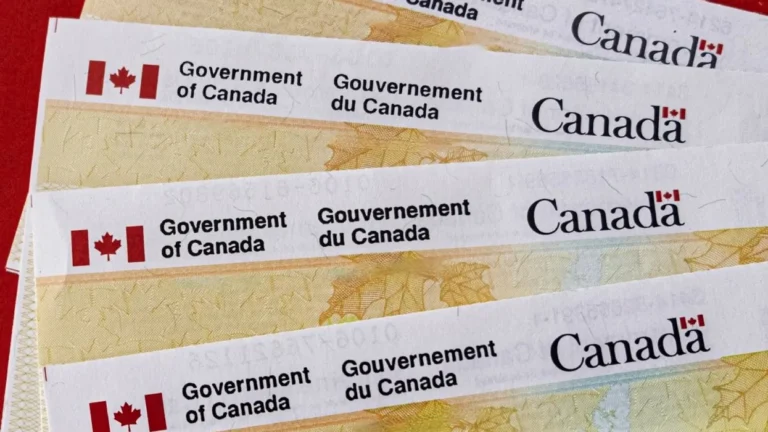
The Canadian federal government is sitting on more than $2.16 billion in uncashed cheques—spread across roughly 3.9 million individual payments—a figure that underscores the persistent inefficiencies of paper-based disbursements in a digital-first economy.
The number surfaced through a written parliamentary question from Conservative MP Adam Chambers and points to a simple but costly reality: billions in issued public funds are never reaching Canadians. Whether due to lost mail, outdated addresses, or the friction of depositing physical cheques, the result is the same—money that remains unclaimed.
While digital payments now dominate everyday transactions, government disbursements have not fully kept pace. Canadians overwhelmingly use electronic methods for banking and commerce, yet cheques remain embedded in parts of the public sector. That gap creates both financial and operational consequences. Even at an estimated administrative cost of about $1.83 per cheque, issuing millions of paper payments still represents a meaningful expense, while also introducing delays and failure points that digital systems largely avoid.
The $2 billion figure is not an isolated issue. For years, uncashed federal payments have quietly accumulated, reflecting a structural challenge rather than a temporary backlog. At its core, the problem is one of delivery. Paper-based systems rely on physical infrastructure and accurate contact information, both of which degrade over time. Digital systems, by contrast, offer immediacy, traceability, and significantly higher completion rates.
A recent commentary from Digital Commerce Payments argues that modernizing public sector disbursements represents a clear opportunity to reduce costs without cutting services. Faster, digital-first methods—whether through direct deposit, Interac e-Transfer, or future real-time payment rails—can improve delivery while lowering administrative overhead.
Another emerging option is prepaid card-based disbursements, which can bridge gaps where traditional banking rails fall short. Providers like Digital Commerce Payments are positioning prepaid programs as a flexible alternative that can move funds quickly while maintaining strong controls and auditability.
The use cases are particularly compelling in time-sensitive or high-friction scenarios. In disaster relief situations such as wildfires or floods, governments can issue branded physical prepaid cards on-site at reception centres, mail them to verified addresses, or deliver virtual cards directly to smartphones. The result is faster access to funds for affected individuals at a moment when speed is critical.
Prepaid cards also offer advantages in income support programs. While direct deposit remains the default, adding a card-based option—either at enrollment or when deposit fails—can help reach individuals who are unbanked, underbanked, or temporarily displaced. That includes people in transitional situations, such as those leaving unsafe living arrangements who may not have fair access to a joint bank account.
Canada’s long-delayed Real-Time Rail is expected to further accelerate the shift toward instant, always-on payments. But adoption within government programs remains uneven, leaving a gap between what is technically possible and what is currently practiced.
For Canada’s fintech ecosystem, that gap represents a significant opportunity. Public sector payments account for billions in annual flows, yet remain under-digitized compared to the private sector. The $2 billion in uncashed cheques is more than a data point—it is a signal that modernizing how governments move money is not just an efficiency play, but a service imperative.
Leave a Reply