


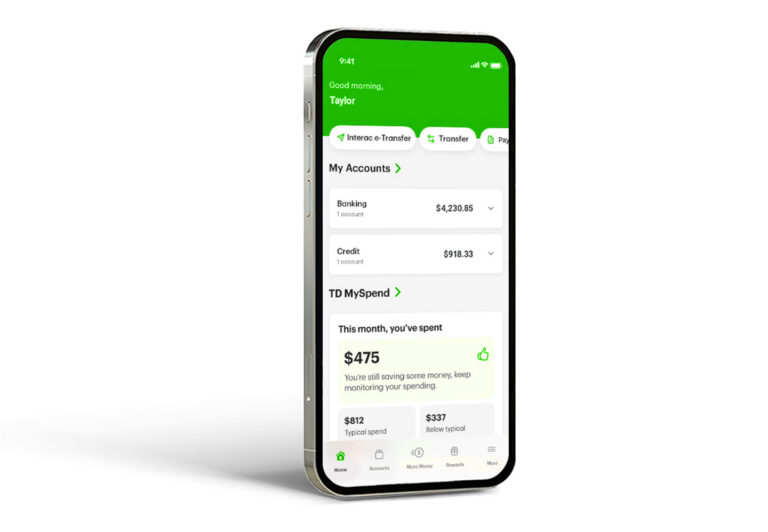
For years, mobile banking apps have been judged by how efficiently they let customers complete everyday tasks: check a balance, move money, pay a bill, or review a transaction.
But as digital expectations continue to rise, banks are increasingly being measured against a broader set of experiences. Customers do not just want a banking app that works. They want one that understands what they are trying to do, helps them find answers faster, and offers useful insights without adding friction or noise.
 At TD, that shift is shaping how the bank thinks about the future of its mobile experience. From faster transaction search and credit score visibility to spending insights, threshold alerts, and more personalized in-app guidance, TD is working to move digital banking from a transactional utility toward something more intuitive, proactive, and human-centred.
For Rizwan Khalfan, EVP and Vice Chair, Strategic Growth, Innovation and Partnerships at TD, the challenge is not simply adding more features. It is building digital experiences that are simpler, more relevant, and more trusted.
In a conversation with Fintech.ca, Khalfan discussed how TD is rethinking the role of the banking app, what customers now expect from digital banking, and how AI and predictive insights could change the app from a place people go to complete tasks into a partner that helps them make better financial decisions with confidence.
TD has talked about moving from digital banking as a utility to digital banking as a more intuitive, personalized experience. What does that shift look like in practical terms for customers using the TD app?
RK: We’re seeing a fundamental shift in client expectations – clients no longer compare their banking experience to other banks, they compare it to the best digital experiences they have anywhere. Mobile has become the centre of that experience, even when a journey starts somewhere else.
Our goal is to make banking effortless for our clients, focusing on a human-centred design created to deliver experiences that feel intuitive, personalized, and increasingly seamless. It starts with a simple, frictionless onboarding experience, and evolves into deeper, more personalized interactions built on understanding client needs, patterns, and goals.
The TD app brings banking, rewards, and the ability to view trading accounts together in one place – giving our clients a clearer and more connected view of their financial lives. By bringing these experiences together in one seamless view, clients can see their full financial picture in one place, making it easier for them make decisions and manage their money with confidence. This is what “More Human” means in practice: using technology to make every interaction simpler, faster and focused on meeting our clients where they are.
When you think about the next generation of mobile banking, what are the biggest customer pain points TD is trying to solve first?
RK: Clients are managing more financial decisions than ever before, and they’re used to experiences that are fast, simple and personalized. They expect the same from their bank – but they also expect their banks to have their back, helping them navigate decisions with confidence and trust.
At TD, we’re focused on helping clients find what they need faster, better understand their finances, and provide timely, useful support all within the app right when they need it. That means creating experiences that not only respond to client needs, but increasingly anticipate them.
Whether clients are checking their balance, moving money, understanding a transaction, applying for a product, or deciding what to do next, they want clarity and confidence every step of the way.
The biggest opportunity is making everyday banking effortless. Removing friction by bringing the right information at the right moment and supporting them in making the best decisions for their needs with speed and simplicity. That’s where we believe digital banking is headed – becoming more proactive, more personalized and more focused on helping clients achieve their goals.
Transaction search sounds simple on the surface, but it can be a major source of frustration for customers. What did TD learn about how people actually look for and understand their spending history?
RK: We’ve long understood that helping clients quickly find and understand their transactions is one of the most important parts of a great digital experience. That’s why we prioritized making transaction search intuitive and accessible across chequing, savings, and credit accounts, so clients can quickly get clarity on their transactions in the moments that matter.
Adoption has been strong, with more than 560,000 clients completing more than 2.6 million chequing and saving account transaction searches so far this year. This is a strong signal that when we make experiences more intuitive, engagement follows.
But this is just the starting point. As client expectations continue to evolve, shaped by the best digital experiences across industries, the opportunity is to go further: moving from simple search to deeper understanding. We’re investing in enhanced transaction details that will provide greater context and insight, helping clients not just see their transactions, but truly understand them.
Ultimately, our goal is to help clients spend less time figuring things out and more time feeling confident in their financial decisions and empowered by the TD mobile app. We’re focused on building experiences that are intuitive, responsive, and anchored in real client needs – turning everyday interactions into opportunities to deliver clarity, confidence, and value.
Credit insights are an area where banks can move from showing information to helping customers make better decisions. How is TD thinking about making credit information more useful, timely, and actionable?
RK: Historically, banks have been very good at providing information. The next evolution is helping clients translate information into actionable insights.
Today, clients can access their credit score directly through TransUnion CreditView® in the TD Mobile app, with no impact to their score, an important step in giving them greater visibility and control.
But expectations have evolved. Clients are looking for more than access to information – they’re looking for insight. That’s where tools like TD MySpend, an in-app money management tool, play an important role, helping clients better understand their day-to-day financial habits in a way that is simple and personalized.
By providing a clear view of where and how clients are spending across their TD accounts – and benchmarking that against their typical patterns – we’re enabling more informed decisions in real time.
More broadly, this reflects a shift we’re seeing across digital experiences. When we combine data, intelligence, and human-centred design, we can move from informing clients to empowering them. That’s where we see the greatest value.
Real-time alerts can be helpful, but they can also become noise. How do you strike the right balance between keeping customers informed and avoiding notification fatigue?
RK: Relevance is everything. Alerts and nudges need to be timely, actionable, and trusted or they quickly become noise.
Everything starts with a human-centred design approach to ensure we’re creating experiences that are clear, purposeful, and genuinely helpful.
For example, TD MySpend provides clients with personalized insights into their spending, automatically categorizing transactions, and helping them understand where their money is going throughout the month. Rather than simply notifying clients about activity, it surfaces relevant and intelligent insights that can help them make informed decisions, adjust behaviours and feel more in control of their finances.
Similarly, our balance and credit threshold alerts give clients real-time visibility into critical moments, while reinforcing trust through secure, authenticated communication.
It’s about delivering the right message, at the right moment, in a way that adds value.
Personalization in banking depends on data, but banking also depends heavily on trust. How do you decide where personalization adds value without making the experience feel intrusive?
RK: For most of us our mobile device has become an extension of ourselves. We use it to stay connected, manage our lives and make decisions every day. I use mine to track everything from my steps to my schedule, to my keys. We’re already relying on these devices to help us navigate and manage many aspects of our lives.
For TD the relationship we have with our clients is built on trust. That’s why every experience we design must earn and reinforce that trust while delivering value. Our approach is to stay anchored in client needs by understanding their goals, behaviours, and financial journeys so we can deliver relevant and helpful experiences.
We’ve seen strong engagement with features like our credit card year-in-review recap, which gave more than 200,000 clients personalized insights into their rewards earned in just four weeks, helping them understand and get more value from the benefits available to them.
Every capability we introduce – whether it’s fraud protection, authentication, or personalization – is designed to strengthen trust while making banking simpler and more accessible.
TD recently ranked first in customer satisfaction with mobile banking apps in the J.D. Power 2026 Canada study, and you’ve spoken about TD’s “digital-first, human-always” approach. What does “human-always” mean when more of the banking experience is happening through an app?
RK: Being digital-first means meeting clients where they are and making it easy for them to bank with us whenever and however they choose. Being human-always means never losing sight of the person on the other end of the device and building experiences that ensure every interaction feels intuitive, supportive, and grounded in trust.
We’re proud that TD ranks #1 in Customer Satisfaction with Mobile Banking Apps by JD Power – recognition that reflects the trust Canadians place in TD and our focus on delivering digital experiences that feel connected, personal and remarkably human.
With 8.8 million mobile clients in Canada and the highest score across all four study factors, this milestone reinforces our focus on putting clients at the centre of everything we design.
For me, “human always” is about ensuring clients feel understood and supported no matter how they choose to engage with us. Technology should always reduce effort, bring clarity and help our clients move forward with confidence – with trust at the core of every interaction.
Looking ahead, how do you see AI and predictive insights changing the role of a banking app—from a place customers go to complete tasks to a place that helps them anticipate needs and make better?
RK: AI presents a powerful opportunity to shift banking from reactive to proactive.
For years, digital banking has focused on helping clients access information and complete tasks. AI is unlocking the ability to anticipate needs, serve up timely insights and empower our clients to make informed decisions with greater confidence.
One of the most important shifts we’re seeing is that technology is adapting to humans, rather than humans adapting to technology – making banking more intuitive and accessible. Clients won’t need to navigate complex menus or know exactly where to look – they’ll simply be able to ask for what they need.
Another opportunity AI creates is the ability to democratize access to personalized financial insights and guidance. AI can help surface relevant information, identify opportunities and provide support in the moments clients need it, supporting them in making informed decisions.
Looking ahead, we see AI helping move clients from insight to action, whether that’s managing day-to-day spending, budgeting or planning for a big life moment. The experience becomes more personalized, relevant and helpful when it matters most.
At the same time, trust remains foundational. Clients need to know the experiences they’re engaging with are transparent, responsible, trusted and backed by TD. AI can help us deliver more personalized support at scale, but it must always be grounded in the trust we’ve earned with our clients.
Ultimately, AI will strengthen our ability to deliver experiences that feel more personalized, more relevant, and more human. This is how the role of the app evolves – from a place clients go to complete tasks, to a partner that helps them move forward with confidence.


Leave a Reply